
Winter & Snow-Themed Speech Therapy Activities for Young Children
Winter speech therapy practically plans itself when you live somewhere with deep snow and freezing temperatures. When temps dip low, or at least they feel like they should, it’s the perfect opportunity to use snow-themed speech therapy activities that keep young children engaged, moving, and communicating through play.
Cold, snowy weather is actually the perfect excuse to bring winter and snow-themed activities into speech therapy and early childhood classrooms. Snow themes are familiar, motivating, and incredibly flexible, which makes them ideal for targeting a wide range of speech and language goals with young children.
Winter speech therapy practically plans itself when you live somewhere with deep snow and freezing temperatures. When temps dip low, or at least they feel like they should, it’s the perfect opportunity to use snow-themed speech therapy activities that keep young children engaged, moving, and communicating through play.
Cold, snowy weather is actually the perfect excuse to bring winter and snow-themed activities into speech therapy and early childhood classrooms. Snow themes are familiar, motivating, and incredibly flexible, which makes them ideal for targeting a wide range of speech and language goals with young children.
The best part? You don’t need anything fancy (not even real snow)! Many of these ideas use items you already have — with optional resources sprinkled in if you want something ready-to-go.
Why Snow Themes Work So Well in Speech Therapy
Snow and winter activities naturally lend themselves to:
High motivation (kids get snow!)
Hands-on play
Repetition without boredom
Easy vocabulary expansion
They’re also perfect for targeting:
Verbs (throw, scoop, build, pour, melt)
Sequencing
Describing
WH-questions
Prepositions
Core words (more, in, out, help, stop)
And because snow play is so flexible, the same activity can be easily adapted for articulation, language, AAC users, and mixed groups.
Snowball Articulation Practice
This is one of my go-to winter activities because it’s simple, engaging, and endlessly adaptable.
What you need:
Crumpled-up paper, white pom poms, or cotton balls
Buckets, bins, laundry baskets, or boxes
How to use it:
Have students practice target sounds, words, or phrases, then throw a “snowball” into a bin after each trial.
Easy adaptations:
Label bins by sound (/s/, /k/, /f/)
Use different bins for word position (initial, medial, final)
Toss into bins for syllable counting or minimal pairs
Take turns for built-in pragmatics and waiting
This works beautifully in small groups and keeps kids moving — which is always a win in the winter months.
Snowman Soup or Hot Cocoa Sensory Play
This one never gets old. Kids love it, and it hits so many language targets naturally.
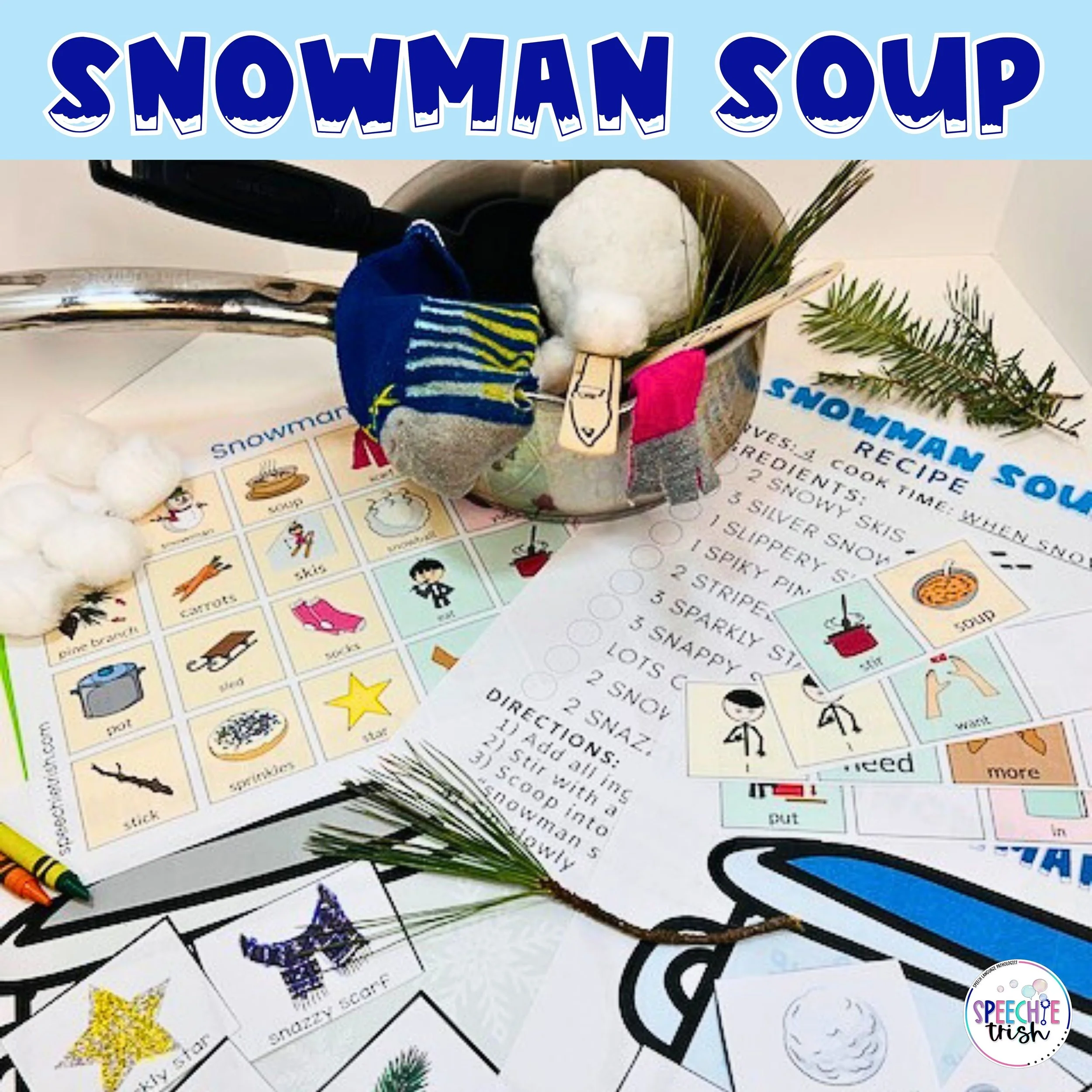
Snowman Soup for Speech Therapy
What you need:
Cotton balls (marshmallows)
Cups or mugs
Spoons
Candy canes
Teapots or small containers
Language goals you can target:
Requesting ("more marshmallows," "I want cup")
Verbs (pour, stir, scoop, drink)
Sequencing (first, next, last)
Expanding phrases and sentences
You can call it Snowman Soup or Hot Cocoa, depending on your group — both work just as well.
If you’re short on prep time, this is also where a ready-made Snowman Soup activity can save you time while still letting kids play with real or pretend materials.
If you want a print-and-go option, you can grab my Snowman Soup speech therapy activity here and use it with items you already have.
Snowmen at Work & Snowmen All Year Book Activities
Books about snowmen are perfect for winter speech therapy because they naturally encourage inferencing, describing, and WH-questions.
Two favorites:
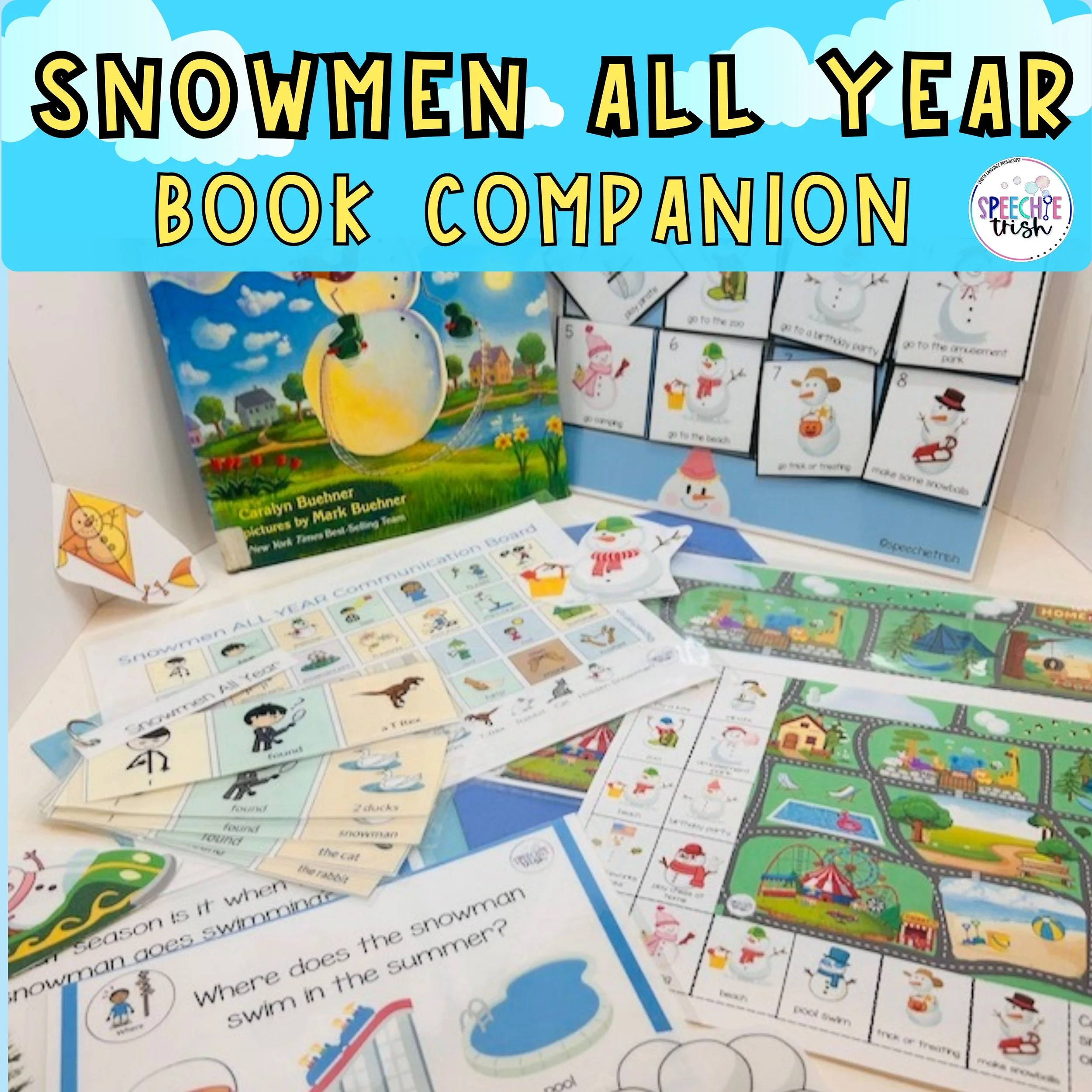
Snowmen All Year Book Companion
Extension ideas:
Place snowmen into scenes based on what they’re wearing
Talk about where they work or play
Describe clothing and tools
Make predictions about what the snowmen might do next
My students especially love map-based activities and matching snowmen to different environments. These activities work well in small groups and are easy to differentiate.
You can find my Snowmen at Work and Snowmen All Year book companion resources linked here if you want ready-made visuals, maps, and carryover activities.
How to Build a Snowman: Sequencing + Movement
Sequencing is a natural fit for snow themes and moving like a snowman makes it even more perfect!
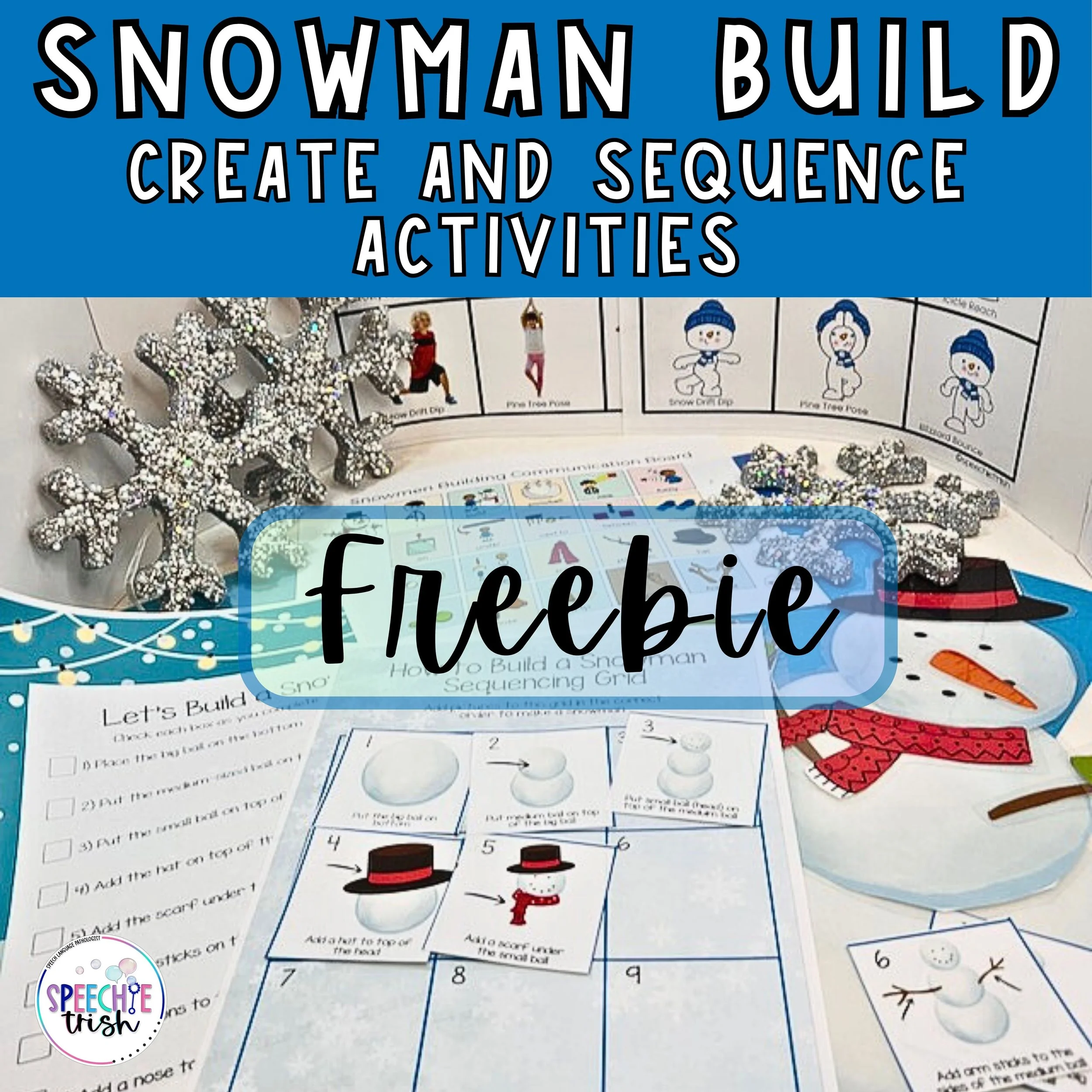
Snowman Sequencing and Build Activities FREEBIE
Activity ideas:
Use picture cards to sequence how to build a snowman
Pair the steps with Snowman Yoga poses for movement
Act out each step together for large groups or classroom push-in
This is especially helpful for students who need movement to stay regulated while learning.
Bonus idea:
Bring out the play-doh! Have students build snowmen using the sequencing cards — and then (the best part) squish them to make them melt. Instant engagement.
Download the free snowman sequencing activity here and pair it with movement, play-doh, or yoga poses for an easy winter lesson.
More Easy Winter & Snow Speech Therapy Ideas
Here are a few additional low-prep ideas to stretch your winter theme even further:
❄️ Melt the Snowman
Use play-doh or white clay
Talk about temperature, change, and cause/effect
❄️ Winter Clothing Sort
Sort and match hats, mittens, boots, scarves from the classroom
Target categories, attributes, and describing
❄️ Snowflake Articulation
Draw snowflakes and write target sounds or words on each arm
Practice while decorating
❄️ Sensory Bin Snowstorm
White rice, shredded paper, or cotton balls
Hide mini objects for describing and requesting
Keep Winter Simple (and Fun)
Winter therapy doesn’t need to be Pinterest-perfect. Snow themes work best when they’re simple, playful, and flexible — and when they let kids interact, move, and communicate naturally.
I always aim to create winter resources that:
Work with materials you already have
Save time when you need it
Support real communication goals
Whether you’re buried under snow, paperwork, or both — I hope these ideas help make winter therapy a little easier (and a lot more fun).