
Bugs, Bees, and Ants: Creative Ways to Use Play Insects in Speech Therapy
Creative Ways to Use Play Insects in Speech Therapy. Plastic ants on the table. Bees in the sensory bin. A fly swatter that has somehow become the most requested tool on my shelf. Bug-themed speech therapy is one of my favorite ways to target real goals all spring and summer — and kids lock into this theme fast.
In this post I'm sharing five creative ways to use play insects in speech therapy sessions, including fly swatter articulation practice, spider egg sensory bins for core vocabulary, bug sorting for attribute goals, and a pretend ant picnic that targets basic concepts beautifully. I'm also sharing my favorite insect-themed books for targeting prediction, play skills, and early sound imitation — including one written by a fellow SLP.
Whether you're working on articulation, prepositions, core words, or descriptors, bugs can target tons of goals without a lot of prep. Read on for all the ideas.
It's that time of year when the bugs are back outside… and apparently in my therapy room too.
Plastic ants on the table. Bees in the sensory bin. A fly swatter that has somehow become the most requested tool on my shelf. My kids are obsessed, and honestly? I'm not mad about it. Insects are one of those themes that kids lock into immediately, and that natural curiosity is exactly the kind of motivation we want to work with in therapy.
Here are some of my favorite ways to use bugs, bees, and all things creepy-crawly to target real speech and language goals.
and….. drumroll please….. After you finish this post, there are even more SUMMER-themed blog posts from fellow SLP’s, check out the list here.
🪲 Fly Swatter Articulation
This one gets loud. Lay your articulation cards face-up on the table (or floor, or a sensory bin lid), scatter some plastic bugs on top, and hand your student a fly swatter.
They swat the bug, say the word, done. The fly swatter is the star here. Dollar stores carry some really fun shapes right now, and I promise the novelty alone will buy you about 20 extra repetitions per session. Kids who "don't want to practice" somehow want to practice a lot when there's a fly swatter involved.
If you want a structured articulation activity with a bee theme already built in, my Bee Articulation Activities and Craft for Speech Therapy has you covered. It targets speech sounds AND prepositions, so you're hitting multiple goals without juggling separate activities.
🥚 Spider Egg Sensory Bin
Hide plastic spiders (or any bug) inside balls of playdough to make "eggs," then tuck them into a sensory bin. Students dig around, find an egg, squish it open, and discover what's inside.
The language possibilities here are wonderful. Core words like "open," "what," "me," "hide," "yuck," and "scared" come up completely naturally. You're not drilling them. They're just… happening. That's the magic of play-based therapy, and bugs make it feel just a little wilder than the usual sensory bin setup. Kids remember the day they found the spider egg. They don't remember the drill sheet.
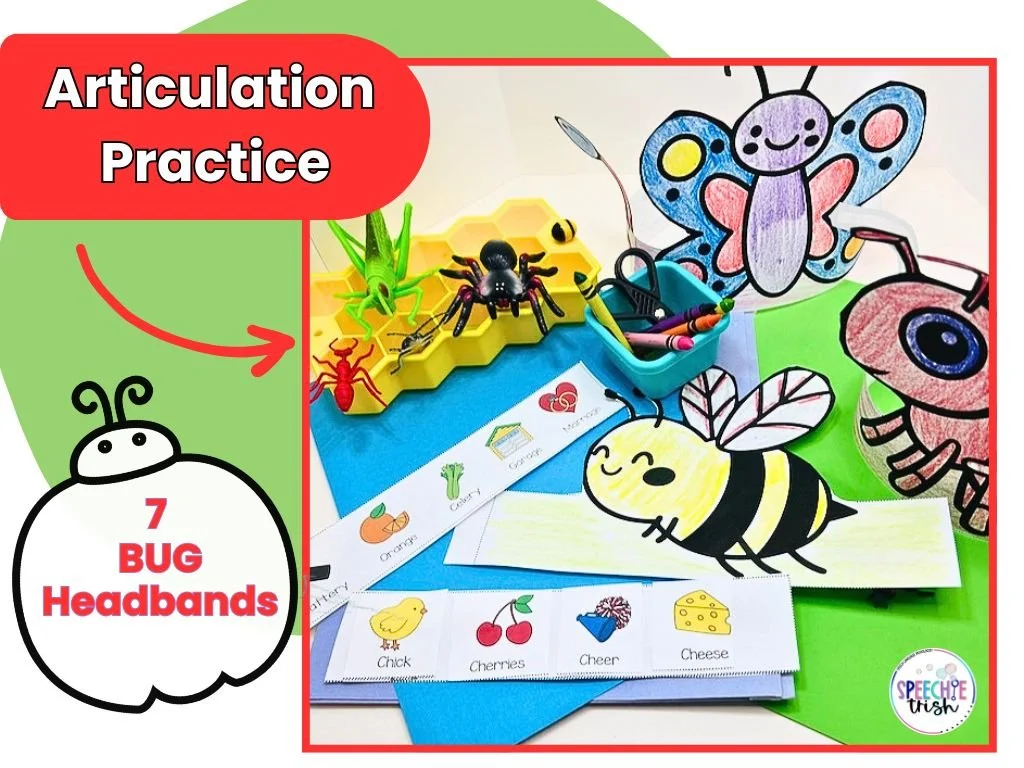
Bug Headband Craft Activity for Articulation
🦟 Bug Headbands for Articulation
Headbands are such a hit in speech! We can work on target sounds in words, sentences and phrases and create a wearable, bug headband that kids wear out of the therapy room and into their classrooms and homes to work on carryover of the sounds. This Articulation Bug and Insect Headband Craft Activity is no prep and kids love to wear bugs on their head! They get to choose among 7 different insects.
🐝 Honey Bee Tree for Core Vocabulary and Reinforcement
If you don't have the game Honey Bee Tree , I want to talk you into it. The bees pop out when the leaves fall and kids absolutely love the suspense. But here's how I use it beyond just the game:
🐝 Pull the bees out and drop them in a sensory bin for preposition work (in, on, under, next to) 🐝 Use the bees as reinforcers during articulation practice. There are a lot of bees, which means a lot of repetitions 🐝 The gameplay itself naturally targets core words: "pull, out, fall down, uh oh, my turn, your turn, push, bee, leaf"
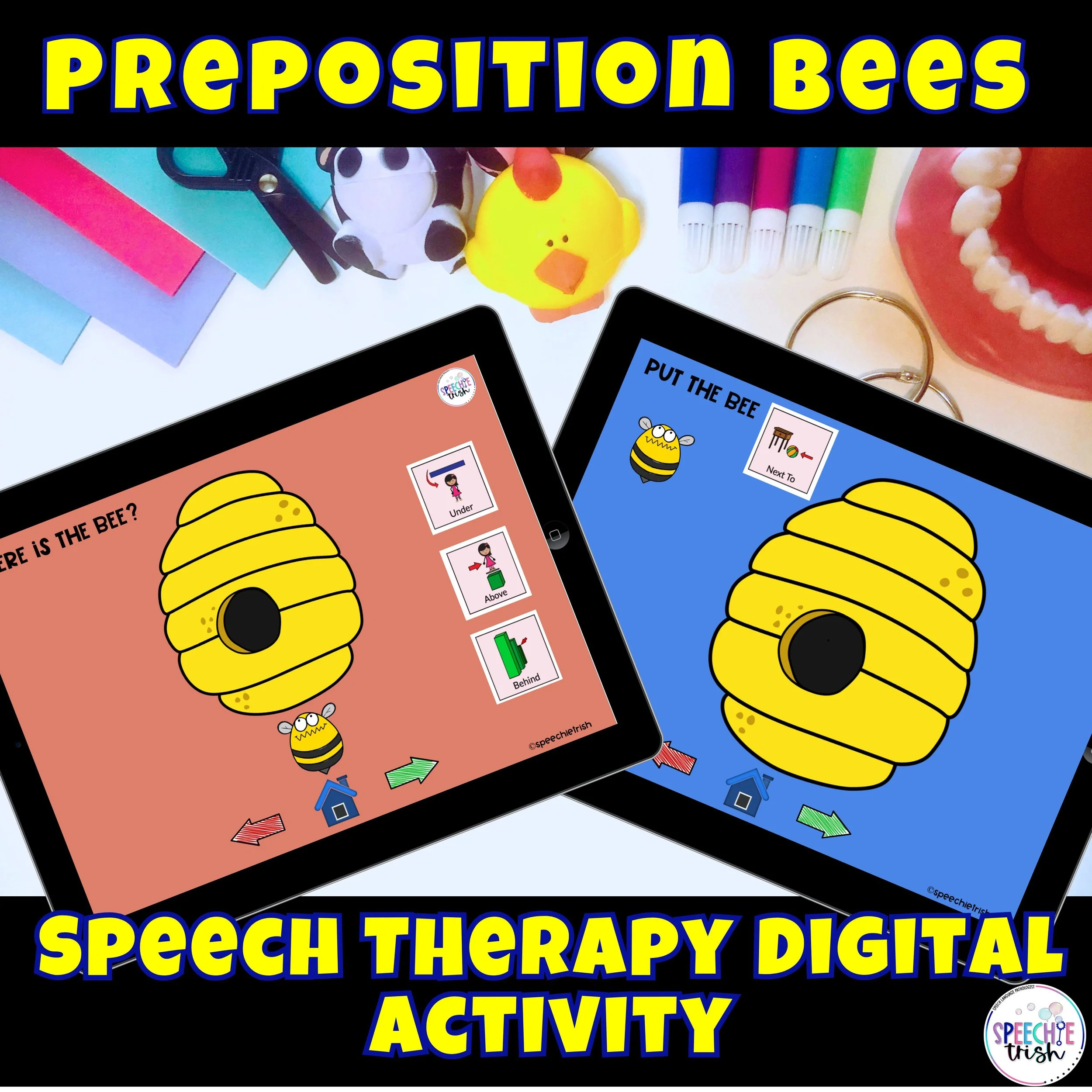
Digital Prepostions with Bees
For a fully digital preposition activity with a bee theme, my Digital Preposition Activity with Bees gives you three interactive activities you can pull up on a tablet or screen with zero prep. Great for teletherapy days or when your sensory bin is buried under the pile of stuff you keep meaning to organize. (No judgment. Same.)
🐜 Ant Picnic for Basic Concepts
If you have my 10 Hungry Ants Interactive Printable Story, here's a fun extension: use the printed ants from the story to set up a pretend picnic.
Grab a basket, some paper plates and cups, and pretend to spread out the food. Hide the ants "in, on, next to, under" the basket or around the picnic setup. Students find them, describe where they were, and you're targeting basic concepts in a context that actually makes sense. It hits those "child will use prepositions in functional contexts" IEP goals beautifully, and the kids think they're just having a picnic.
🪲 Bug Sorting for Attributes and Descriptors
Dump out a container of mixed plastic bugs and just… start sorting and describing.
This one is quietly one of my favorites for IEP goals targeting attributes. "That one is red and has wings." "This one is small and black." "Mine has six legs and yours has eight." You're hitting 2-3 attribute descriptions without it feeling like a target at all. It feels like playing. Which is because it is.
It doesn't need to be complicated. A bag of dollar store bugs, a table, and a few minutes is all it takes to get meaningful language practice out of this one.
📚 Books That Work Beautifully with a Bug Theme
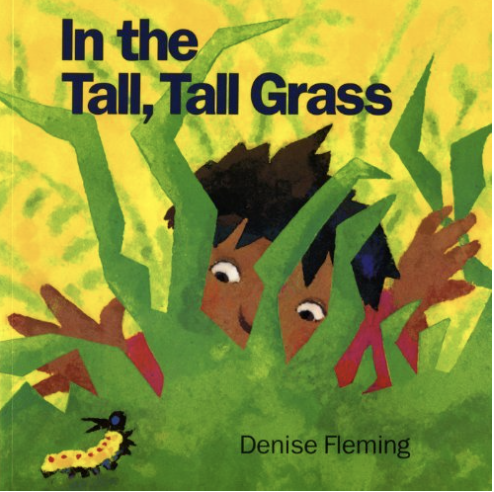
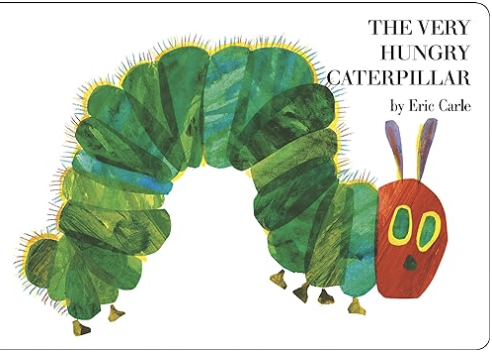
Pairing a book with your bug theme pulls everything together. Here are three I reach for:
In the Tall, Tall Grass by Denise Fleming — gorgeous illustrations, simple repetitive text, and the perfect opportunity to imitate early sound combinations (buzz, hum, crunch). Read it outside if you can. The experience is unmatched.
The Very Hungry Caterpillar by Eric Carle — classic for a reason. Sequencing, counting, naming foods, predicting what comes next, core vocabulary. This book works with kids of all ability levels and honestly never gets old.
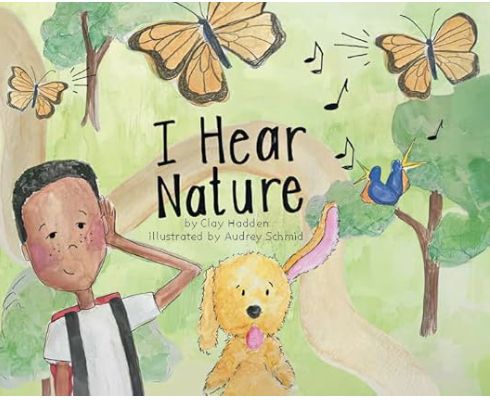
I Hear Nature by Clay Hadden — written by a fellow SLP, which already tells you it was built with therapy targets in mind. It's wonderful for exploring surroundings, imitating nature sounds, and building early sound combinations. If you haven't grabbed this one yet, add it to your cart.
All three of these are great for targeting prediction skills, play skills, and onomatopoeia (buzz, shhh, tweet). Take them outside sometime. Kids pay attention differently when they're not sitting in the therapy room. You get it.
Bugs aren't just a spring theme. They're a vehicle for real, meaningful language practice that kids actually look forward to. Start small, see what your kids respond to, and let the play lead the way.
From bugs to camping….. here is another amazing theme to use in speech this summer. My friend Allison Fors has put together tons of incredible camping themed speech therapy activities (including free wh-questions right on the post!)
A quick note: some of the links in this post are affiliate links, which means I may earn a small commission if you make a purchase — at no extra cost to you. I only ever recommend products I use myself in my own therapy room.

Camping Themed Activities for Speech Therapy
Favorite camping-themed and s’more themed speech and language therapy activities that work well in summer or even during those first few weeks of school. These activities are ideal for preschool through 2nd grade and are easy to adapt for a range of learners and goals.
Summer is in full swing, and whether you're soaking up the sun or planning your back-to-school therapy ideas, a little camping theme goes a long way in keeping sessions playful and purposeful. From sticky s’mores to pretend campfires, this theme is perfect for targeting a variety of speech and language goals with minimal prep.
In this post, I’m sharing some of my favorite camping-themed speech and language activities that work well in summer or even during those first few weeks of school. These activities are ideal for preschool through 2nd grade and are easy to adapt for a range of learners and goals.
🍫 Articulation Around the Campfire

My S’more Articulation Camping Activity is a sweet and simple way to target speech sounds while building a pretend s’more! Students practice their target words as they build their treat with printable graham crackers, marshmallows, and chocolate pieces. You can use the included word cards or add your own targets with sequencing cards and a craft, this hands-on activity is great for:
Repetition-based practice (drill with a purpose!)
Sorting by initial, medial, and final sounds
Play-based speech sessions during summer or camp-themed weeks
Bonus tip: Bring in real mini marshmallows or use pom-poms for extra sensory fun!

🔥 Sentence Expansion with Campout Scenes and S’more Sensory Bins
Set up a simple camping-themed background scene (felt board, printable scene, or a tray with mini items like tents, logs, and animals) and encourage students to create detailed sentences. Try using picture supports or sentence starters like:
“The raccoon is…”
“I see a ___ under the ___.”
“The marshmallow is on the stick.”
You can gradually expand their sentences from 2 words to full 5+ word phrases depending on their level. Use visuals to scaffold and model expanded utterances.
My S’more sensory bin (pictured above) includes:
Cotton Balls (for Marshmallows)
Sticks from the backyard
Card board square cut outs (for graham crackers)
Brown felt squares (for chocolate)
Clothes pins with paper cut out flames (for fire)
🍃Nature Scavenger Hunt
Target “where questions” and using attributes to describe the finds by going into the back yard, woods or local playground and hunt for nature items. Bring a bag (or an egg carton) to put your natural treasures into. Click for free 4 season nature scavenger hunts resource that has the pictures of the items that kids can look for.
🏕️ Core Words in the Wild
Camping offers the perfect setting to practice core vocabulary! Set up a pretend play session where students get to pack for a camping trip or pretend to roast marshmallows. Some easy-to-target core words and concepts include:
In / out – “Put the marshmallow in the bag.” “Take it out.”
On / off – “Put it on the stick.” “Take it off the fire.”
Open / close – “Open the cooler.” “Close the tent.”
Yummy / yucky – Use real or pretend food to describe likes/dislikes.
Pair these concepts with a simple communication board or AAC system to support all communicators.
📚 Camping-Themed Books for Language Goals
Books are a natural fit for summer speech sessions. Here are a few camping-themed titles that work well for targeting WH questions, verbs, vocabulary, and more:
“Pete the Cat Goes Camping” by James Dean
Great for sequencing events, describing actions, and answering WH questions, Pete needs to overcome his fears about Bigfoot!“Maisy Goes Camping” by Lucy Cousins
Simple text and bright illustrations make this perfect for describing actions and targeting positional concepts and for inferencing.“I Hear Nature” by Clay Hadden
This interactive flip book for toddlers and babies by a Speech Language Pathologist develops early language, prediction, sensory engagement, and interaction skills.
Pair reading with a follow-up retell activity using character cutouts or sequencing cards for comprehension and narrative language.
🐻 WH Questions and Verb Use by the Fire
You can turn just about any pretend play or book activity into a WH-question practice moment. Try using a camping scene to ask:
Who is in the tent?
What is the bear eating?
Where is the marshmallow?
When do we sleep at camp?
Why do we need a flashlight?
Encourage students to respond in complete sentences and expand with supporting visuals or sentence stems.
You can also have students act out or label verbs during camping play: roasting, hiking, eating, sleeping, building, running. Use props like flashlights, sticks, and toy animals to make it active and fun!
Wrap-Up: Language Learning That’s S’more Fun!
Summer therapy doesn’t have to feel like summer school. With a fun theme like camping, you can target a wide range of goals while keeping your sessions light, hands-on, and engaging. Whether you’re working on articulation with a s’more in hand or building language through pretend play and stories, these activities are designed to keep kids communicating.
If you’re looking for a no-fuss way to bring this theme to life, check out my Camping S’mores Articulation Activity—it’s a hit with my students and a great addition to your summer therapy toolkit.
Want more summer speech therapy activity ideas for your kids?
Check out these summer themed ideas including mermaids, sharks and camping from Panda Speech
OR
Check out the ULTIMATE summer themed list of ideas, activities and freebies for speech therapy
Disclaimer: This blog post contains affiliate links