
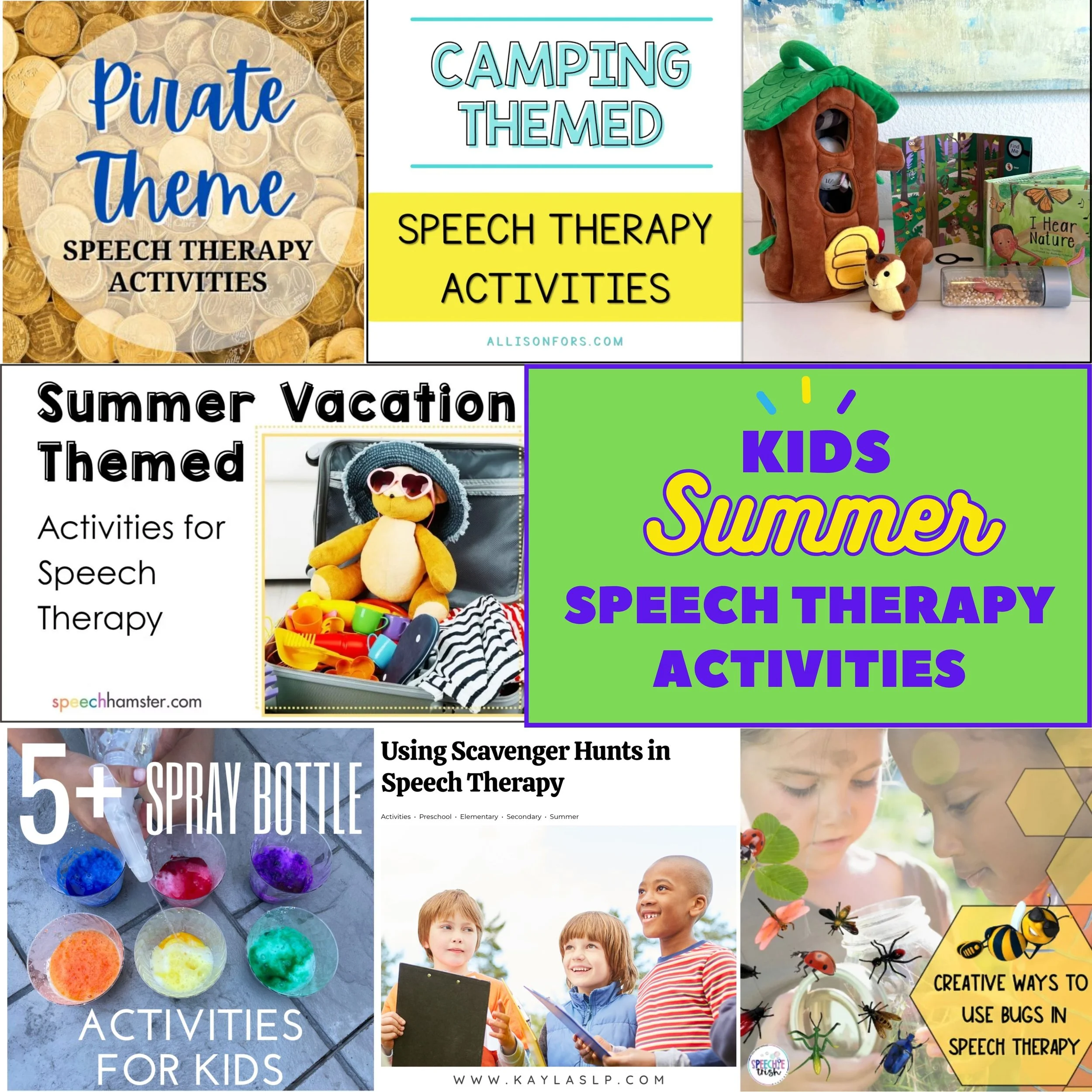
Best Summer Speech and Language Activities: A Complete Round-Up from 6 Speech Therapists
Summer speech therapy activities from 6 SLPs — bugs, pirates, camping, scavenger hunts, spray bottles, summer vacations and more. Low-prep ideas for preschool through elementary.
Summer is genuinely one of the best times to do speech therapy. Kids are in a different headspace. The pressure of the school year is off. They're outside, they're playing, they're talking about beaches and bugs and pirates and camping trips. The motivation is right there. We just have to meet them in it.
Which is exactly why I teamed up with five incredible SLPs to bring you this Summer Speech Blog Hop. Each of us put together a post packed with ideas, activities, and real resources you can use right now. There are freebies tucked in here, paid resources worth every penny, and more low-prep, high-impact activity ideas than you'll know what to do with.
(Fair warning: you may end up with a very long browser tab situation by the time you're done reading.)
Here's your full lineup!
1. 5+ Spray Bottle Activities for Kids
By Talking Mama Bears (Mandy & Kate)
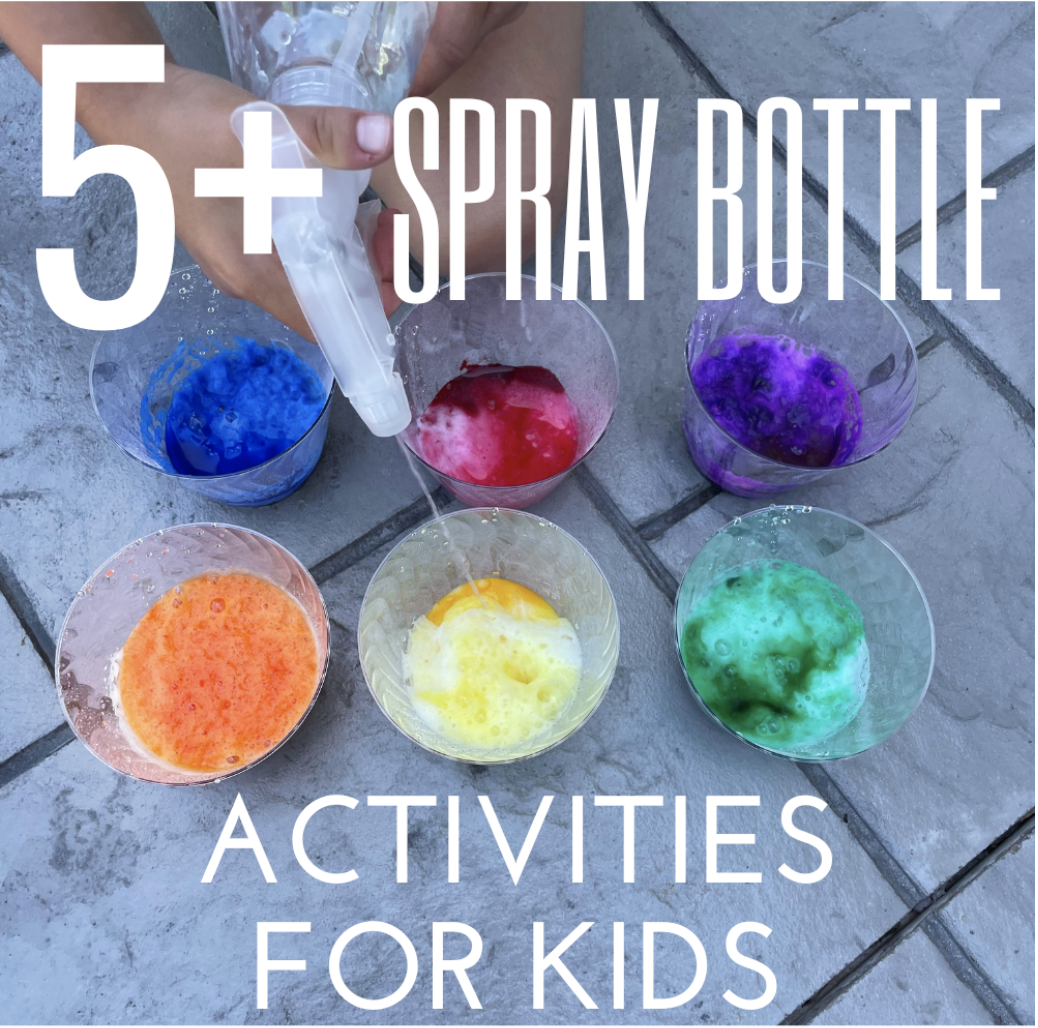
Car wash, paint, spray and experiment
Okay, the spray bottle is officially the most underrated therapy tool of the summer. Mandy and Kate rounded up six water play activities that are low-prep, outside-ready, and absolutely loaded with language targets.
We're talking car washes that build descriptive vocabulary, spray painting with primary and secondary color concepts, science experiments with baking soda and vinegar (yes, really), and a floating objects bin where kids spray their guesses based on describing clues. Every single activity is designed to work with items you already have at home or in your therapy room.
Plus, there's a free Summer Vocabulary Card download that pairs perfectly with the activities and doubles as BINGO, memory, and more.
🎯 Goals you can target: descriptive language, following directions, sequencing, predicting, prepositions, expressive vocabulary.
Click the button below for all of the spray bottle speech and language ideas!
2. Bugs, Bees, and Ants: Creative Ways to Use Play Insects in Speech Therapy
By Speechie Trish (That's me!)
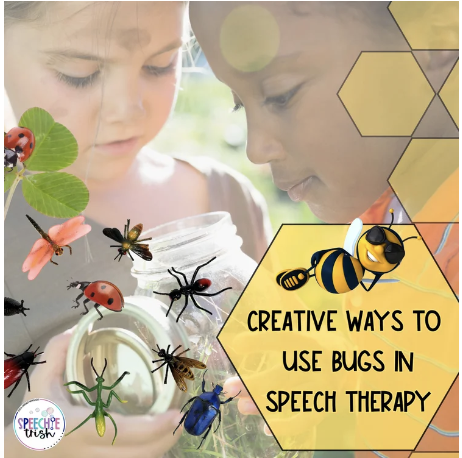
Fly swatters, headbands, picnic ants and spider eggs
I'll be honest: my therapy room has had a plastic insect problem for several weeks now. There's a fly swatter that has become the most requested tool on my shelf, and I'm genuinely not mad about it.
In this post, I shared some of my favorite ways to use bugs and all things creepy-crawly to target real speech and language goals, from fly swatter articulation that gets a little loud (fair warning) to spider egg sensory bins where core vocabulary just…happens. No drilling needed.
There are also book recommendations (including one written by a fellow SLP), a honey bee tree activity that targets everything from prepositions to reinforcement, and an ant picnic activity that hits "child will use prepositions in functional contexts" IEP goals beautifully.
Plus there are FREE Basic Concepts Visuals you can use with bugs!
🎯 Goals you can target: articulation, core vocabulary, prepositions, AAC, play-based language, descriptive attributes
Click the button below for all of the insect and bug speech and language ideas!
3. Pirate Speech Therapy Activities
By Laura at Pinwheel Speech
Treasure hunts, obstacle courses, sensory bins and maps
Ahoy, indeed. Laura put together a seriously thorough pirate-themed post that works for everything from a single session to a full pirate week. And yes, she mentions Talk Like a Pirate Day, which I am now adding to my fall calendar immediately.
The activity ideas here are creative and varied: treasure hunts with preposition and carrier phrase practice, sensory bins with coins and gems, obstacle courses perfect for co-treating with OT, and a "Captain Says" twist on Simon Says for receptive language. She also included a cooperative shipbuilding project for social skills groups that I am genuinely obsessed with.
There's a free pirate vocabulary activity at the end of the post, plus Laura's own Pinwheel Speech resources for articulation, including pirate wheel crafts and pirate hat activities covering a wide range of speech sounds.
🎯 Goals you can target: prepositions, following directions, articulation, vocabulary, social skills, sequencing, story retell
Click the button below for all of the pirate themed speech and language ideas!
4. Practical Ways to Use a Summer Vacation Theme in Speech Therapy
By Shannon at Speech Hamster
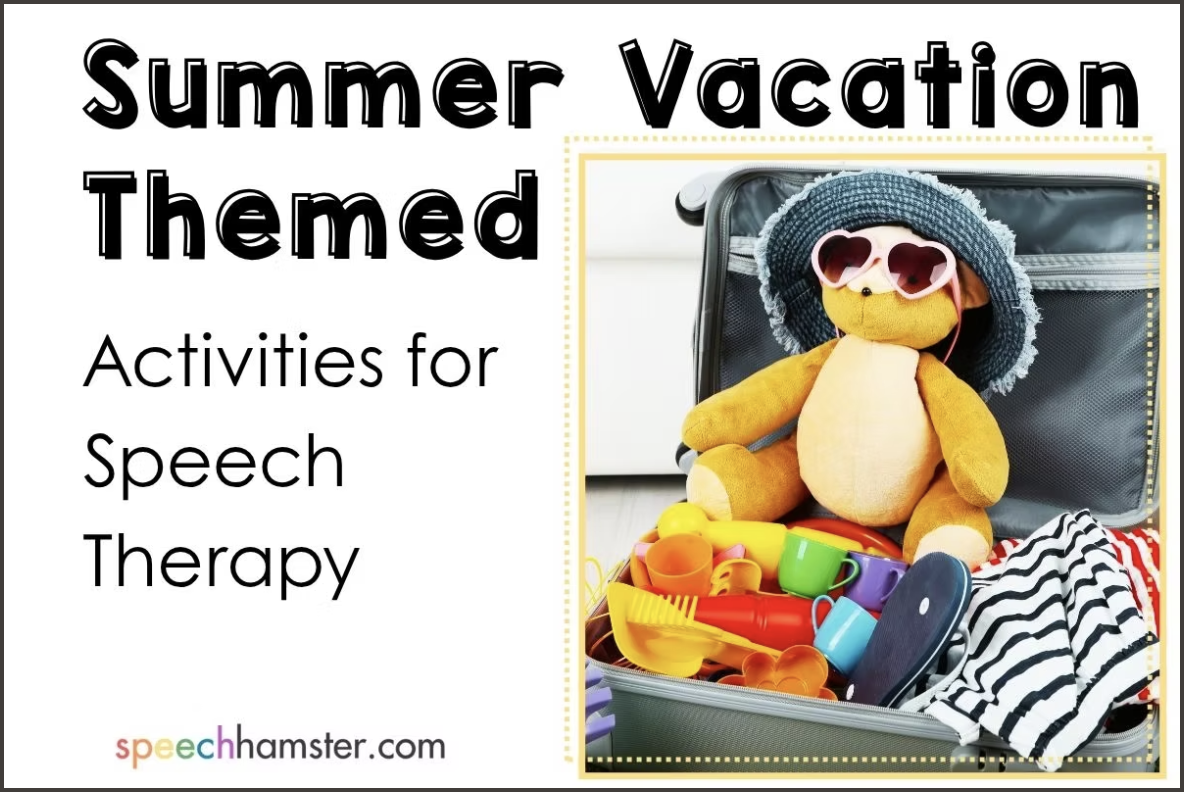
Planning, packing, building scenes and problem solving
One theme, multiple goals, and a setup simple enough that you can run it all session long without needing a totally different plan for every kid. That is Shannon's specialty, and this post delivers.
She walks through a full progression using a summer vacation theme: discussing destination options, packing a suitcase, planning activities, building a scene, and finally creating a vacation story or problem-solving scenario. At every stage, she layers in vocabulary, sequencing, following directions, WH questions, and expressive language in a way that feels totally natural.
There's a fill-in-the-blank story AI prompt included (love this), book recommendations, and links to Shannon's printable and digital resources including following directions cards, seasonal stories, and articulation color-by-number pages. Plus a free card game bundle!
🎯 Goals you can target: vocabulary, categories, sequencing, WH questions, following directions, narrative, problem-solving
Click the button below for all of the summer vacation themed speech and language ideas!
5. Using Scavenger Hunts in Speech Therapy
By Kayla SLP
Indoor and Outdoor Hunts for a seasons
A scavenger hunt is one of those activities that sounds like "fun thing kids do" but is actually a clinician's dream if you know how to run it. Kayla knows how to run it.
This post covers indoor and outdoor versions, the specific materials that make it work (clipboards, magnifying glasses, collection bags, and kids' sunglasses just for fun), and how to adapt the complexity for any student. She includes links to free spring and summer, fall, and winter outdoor scavenger hunt resources, plus back-to-school themed worksheets for indoor hunts that pair activity and clue-finding in one move.
Get outside, hand them a clipboard, and let the goals happen naturally.
🎯 Goals you can target: vocabulary, following directions, articulation, expressive language, receptive language, social skills, categorization
Click the button below for the scavenger hunt speech and language ideas!
6. Camping Themed Speech Therapy Activities
By Allison Fors
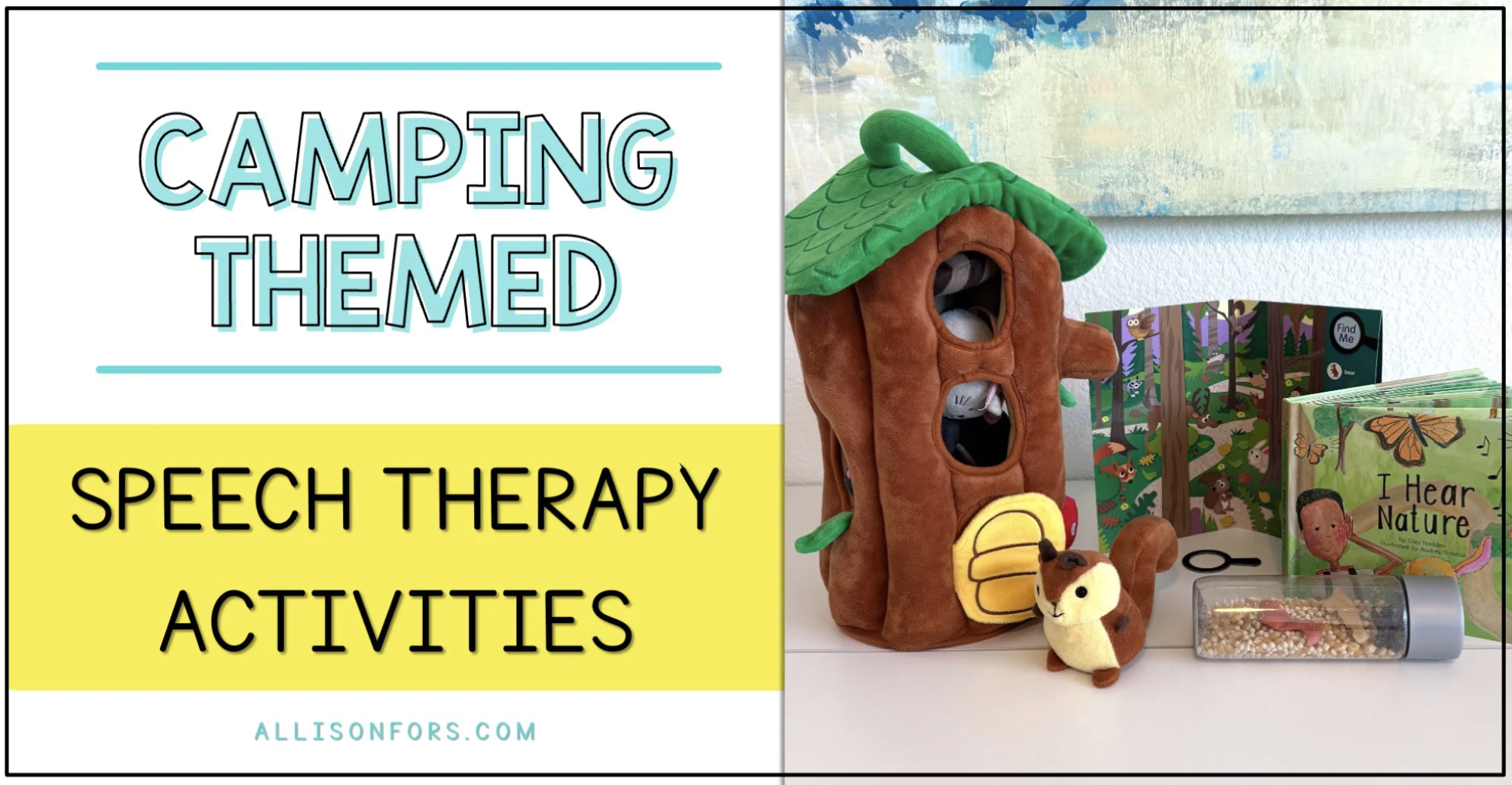
Camping is one of those themes that hits practically every language target you could ask for, and Allison's post makes that very clear. This one is thorough in the best way: vocabulary, descriptive language, prepositions, sequencing, storytelling, WH questions, following directions, categorization, articulation, AND conversation skills. She really did cover it all
What I especially love here is the camping-themed WH question list, which is ready to print and use, and the book list, which includes one of my personal favorites: I Hear Nature by Clay Hadden. The post also features Allison's own language scene and barrier game resources if you want a no-prep structured activity to anchor the theme.
There are camping toy suggestions too, including a Play-Doh Campfire Creations Kit that I'm pretty sure my kids would never want to put down.
Included in her post is a FREE list of camping themed Wh-questions
🎯 Goals you can target: vocabulary, prepositions, sequencing, WH questions, following directions, storytelling, articulation, social communication
Click the button below for all of the camping themed speech and language ideas!
The Bottom Line
Summer speech therapy doesn't have to be the chaotic scramble it sometimes feels like in June. When you've got solid themes and real ideas to pull from, the planning gets so much easier.
Spray bottles, bugs, pirates, road trips, scavenger hunts, camping trips. There's something in this round-up for every kid on your caseload, every setting you work in, and every goal on your list.
Start small. Pick one post. Try one activity. See what your kids respond to. And if you end up with a fly swatter in your therapy room because of this post? I fully support that.

Engaging Preschoolers with Interactive Storytime: Using Books, Props, and Play
Using props during storytime can make stories more meaningful and memorable for children. Props can include pictures, stuffed animals, and toys that children can hold and move as the story progresses.
As a speech-language pathologist, I often use books in my therapy sessions to create engaging and interactive themes that help target communication goals. Using books with young children encourages receptive and expressive language skills, facilitates “reading” and listening comprehension, expands vocabulary and syntactic skills, and promotes a love of reading.
As a speech-language pathologist, I often use books in my therapy sessions to create engaging and interactive themes that help target communication goals. Using books with young children encourages receptive and expressive language skills, facilitates “reading” and listening comprehension, expands vocabulary and syntactic skills, and promotes a love of reading.

“Language and literacy develop concurrently and influence one another. What children learn from listening and talking contributes to their ability to read and write and vice versa. For example, young children's phonological awareness (ability to identify and make oral rhymes, identify and work with syllables in spoken words, and the ability to hear, identify, and manipulate the individual sounds—phonemes—in spoken words) is an important indicator of their potential success in learning to decode print,” according to a Preschool Policy Brief by the National Institute for Early Education Research (NIEER) at Rutgers University, April 2006.
Research tells us that children who fall behind in oral language and literacy development before formal schooling are less likely to become successful readers, and their achievement lag is likely to persist throughout primary grades and beyond. Therefore, it is crucial for SLPs, teachers, and parents to make reading and literacy fun and engaging. It’s not about sitting down to read or listen to an entire book; it’s about engaging children in the story, the pictures, and the words. We can do this by giving kids a “part” in the story with their words, sounds, movements, or props.

Engaging Children with Props:
Using props during storytime can make stories more meaningful and memorable for children. Props can include pictures, stuffed animals, and toys that children can hold and move as the story progresses. For example, books like "5 Little Ducks," "The Gingerbread Baby," and "Tip Tip Dig Dig" are perfect for incorporating props to engage children. I have a variety of book companions ready-made in my store that include props and activities to use in speech therapy, the classroom, and at home.

Types of Books That Engage Children
Books with Repetitive Text: Repetitive text helps children comprehend and remember the story due to repeat phrasing. "The Pout Pout Fish," "5 Little Ducks," and "It’s Mine" are excellent examples of books with repetitive text included in my water-themed companions.
Books That Encourage Movement: Movement helps children attend to longer stories and builds imitation skills and memory. Books like "Tip Tip Dig Dig," "The Napping House," and "Dinosaurumpus" are great for incorporating actions such as stirring, pouring, and whisking, using real-life objects. Click here for Movement themed book companions
To grab the bundle of book companions for year-round props and activities, including books with incorporated movement, repetitive text, lift-the-flap books, and interactive books, click below.
Want to know more about the types of books that best engage preschoolers?
Click to see this blog post, Top Children’s Books for Speech and Language Development. I’ve highlighted the top children’s books, linked all of the books and categorized them by type.
By using books, props, and play, we can create interactive and engaging storytimes that not only make reading fun but also support the speech and language development of young children.
Happy reading!